
Finding Dallas Residents Through Records
Dallas County does not keep one public household roll. The first source depends on the question. A current street address works best with the Dallas Central Appraisal District, known as DCAD. A past street number belongs in a year-specific directory or newspaper. A named party to a conveyance belongs in the County Clerk’s official-records index. Court, voter, vital, business, and custody systems each document a different event, not a general claim that a person is at an address.
Keep the source date and record role beside every result. DCAD may name an owner, while a directory printed an occupant in a particular year. A voter record concerns registration, and a deed names legal parties. Those distinctions prevent a search from turning an old or unrelated match into a claim about a current Dallas resident.
- For an address, search DCAD and record the account number, situs, legal description, and owner mailing field separately.
- Search the County Clerk index by grantor, grantee, subdivision, document type, or document number with a narrow recorded-date range.
- For a name, use the relevant court or VoteTexas route, then compare a second record that has a matching date, place, or record number.
- For an earlier household, request the exact directory year and street or reverse section from Dallas Public Library.
- When the online route stops, contact the custodian with the record type, date range, account, instrument, or case number.
Dallas Resident Records Offices
The offices below hold different parts of a Dallas residents directory trail. The County Clerk Recording Division keeps recorded instruments and its free index. DCAD organizes appraisal accounts, parcels, situs addresses, and owner mailing fields. Dallas County Elections routes registration questions, while VoteTexas provides the state lookup instructions. The address-by-address chain is developed in the Dallas street directory, rather than repeated here.
Dallas County Clerk Recording Division
Records Building, 500 Elm Street, Suite 2100
Dallas, TX 75202
214-653-7099
Dallas Central Appraisal District
Appraisal accounts, parcels, and map data
Dallas County, TX
Use the current DCAD contact route
Dallas County Elections
1520 Round Table Drive
Dallas, TX 75247
Voter registration: 214-819-6388
Dallas Parcel Keys Before Deeds
DCAD is the practical first stop for a current parcel clue. Its main search offers owner name, account number, street address, business name, and map modes. The street form accepts an address number or range, direction, street name, building, suite, city, and account type. DCAD advises leaving off the street type when a search fails and permits a percent wildcard for uncertain street spelling.
Read the resulting account as an appraisal record. It can show the account number, situs, owner name, owner mailing address, legal description, values, exemptions, and taxing jurisdictions. The situs is the physical parcel location. The mailing address is for correspondence and can be elsewhere. Neither an appraisal entry nor a name in its owner field proves that a particular person occupies the property.
| DCAD field | Dallas research use |
|---|---|
| Situs address | Anchors the physical parcel and map search. |
| Account number | Connects the result to appraisal data and a precise parcel. |
| Legal description | Links a block, lot, subdivision, or acreage description to the deed search. |
| Owner mailing address | Shows tax correspondence, not present physical residence. |
Dallas Deed Index Search Terms
The Dallas County Official Records Search starts with a department selector. Its Quick Search accepts a grantor or grantee, subdivision, document type, or document number, plus a recorded-date range. Search Index Only keeps the search to indexed words. The OCR choice searches index and full text, but the county notes that OCR quality can vary. Begin with a narrow date range and a name variant before widening the terms.
Capture the instrument number and party role before ordering a document. The online index is free, while images and certified products follow a separate cart or request path. The Recording Division’s request form accepts a recorded name, party name, instrument number, document type, and property address. Plain copies are listed at $1 per page; certified copies add $5 per document. The exact online index start year was not located, so older deed work may need Central Records, library microfilm, or a counter request.
| Official Records control | How it is used | Limit |
|---|---|---|
| Department selector | Choose the relevant record group before searching. | Options were not exposed in the research capture. |
| Search Term | Enter a grantor, grantee, subdivision, document type, or document number. | A party may not be an occupant. |
| From and To | Restrict the recorded-date window. | Recording date is not always the event date. |
| Index or OCR scope | Test exact index terms before OCR. | OCR can misread names. |
See the Recording Division source view before sending payment or a mail request.
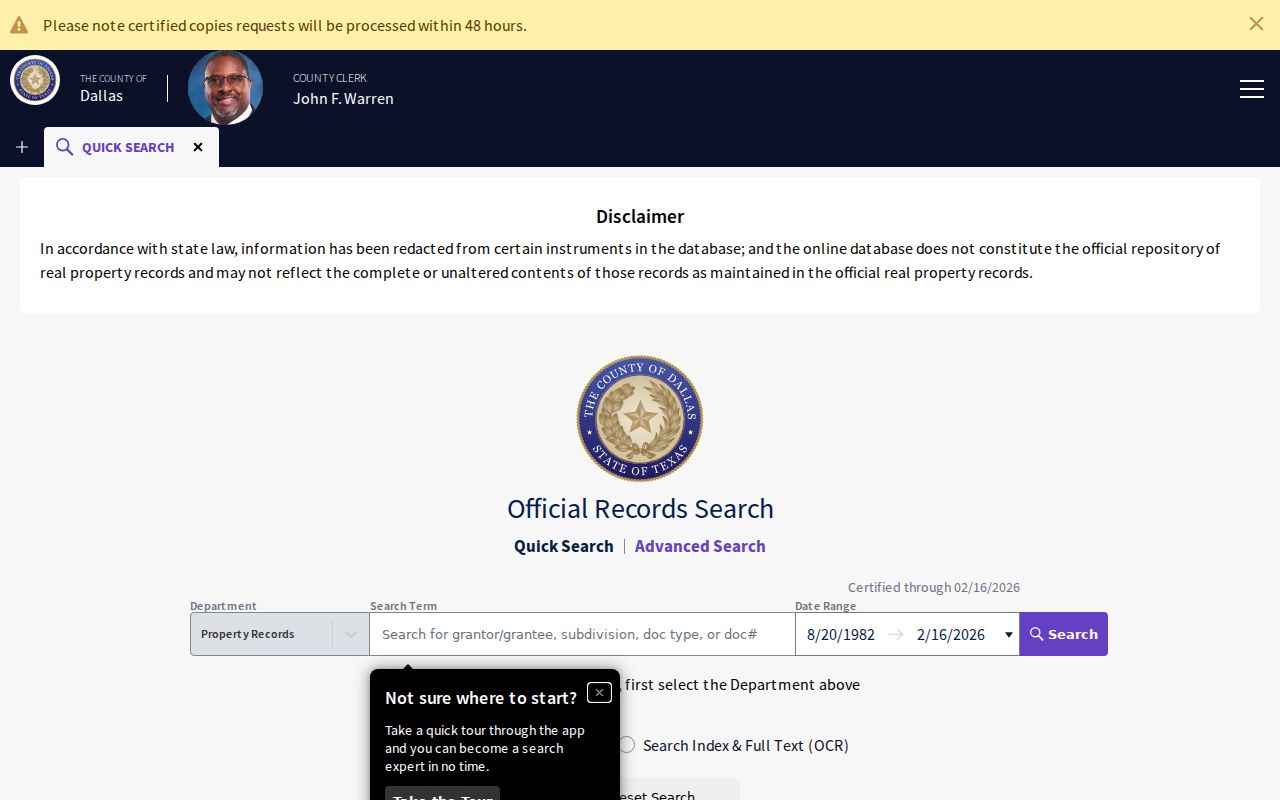
The portal screenshot shows why a search term and date range should be recorded with the result, not reconstructed later from memory.
Dallas Courts by Record Type
A court name match is not a resident confirmation. Dallas County Odyssey serves county and district civil, family, and probate case information, while the District Clerk handles its civil and family records, the County Clerk handles county and probate material, and Justice of the Peace files stay with the appropriate precinct. Dallas Municipal Court has its own search. Federal matters use PACER and the Northern District of Texas. Choose the court layer first.
Odyssey Smart Search accepts a record number or a name in Last, First Middle format. Its verified modes include Smart Search, attorney bar number, attorney name, business name, case cross-reference number, case number, and citation number. Court location narrows results. Family, juvenile, sealed, expunged, and other confidential material may remain restricted even where a party name can be searched.
Dallas County Odyssey Smart Search displays the local court-search route.
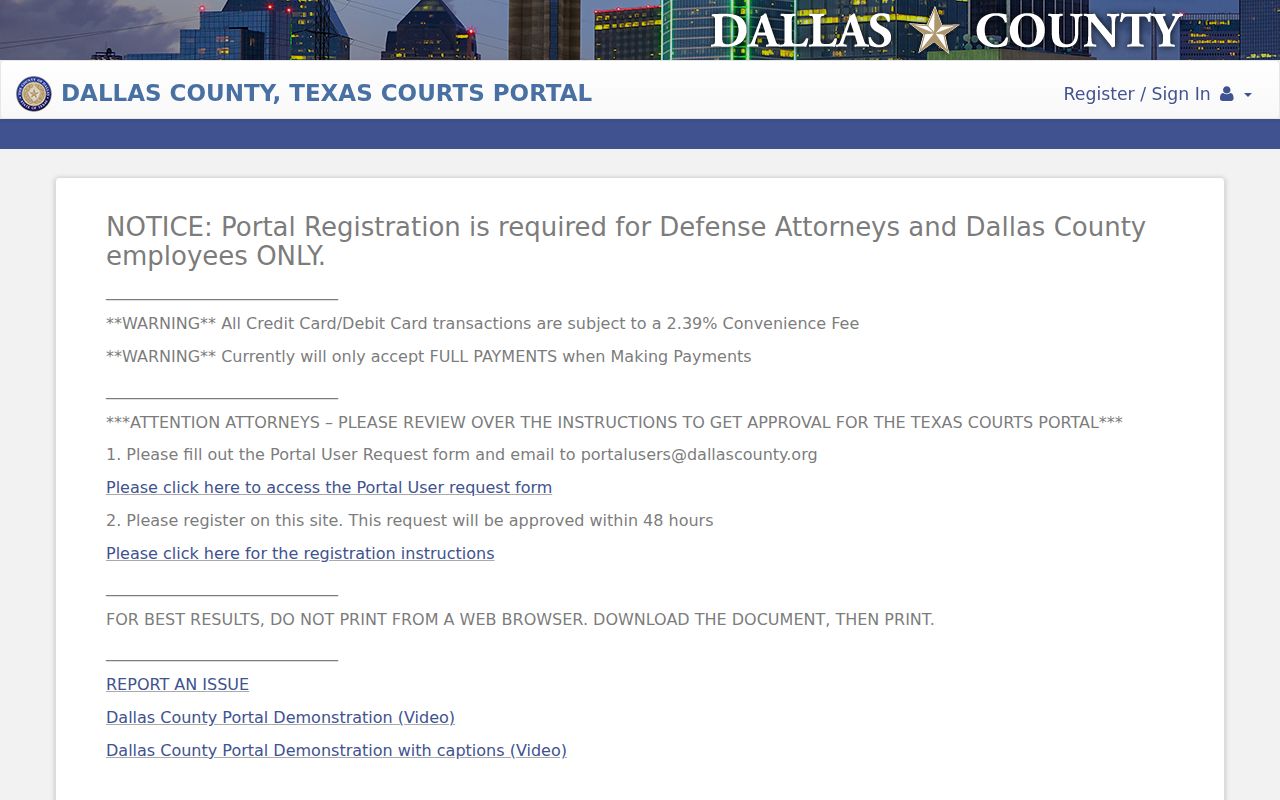
Use the case number, court location, party role, and case date as matching fields, then request a certified or full file from the correct clerk when the access rules allow it.
Current Dallas Resident Directories
Current Dallas resident directories are record-specific indexes, not one complete roll. DCAD ties named owners to appraisal accounts. The County Clerk index ties parties to recorded instruments. VoteTexas gives a registration route with protected fields. County and city courts list parties and cases under their own rules. Each source can support a narrow question when its date and field limits are kept in view.
| Source | Who It Lists | Keeper | Access |
|---|---|---|---|
| DCAD appraisal search | Owners and parcel accounts | Dallas Central Appraisal District | Free search |
| VoteTexas registration route | Registration information | Texas SOS and local registrar | Protected fields apply |
| Official Records Search | Recorded-instrument parties | Dallas County Clerk | Free index; image route separate |
| Odyssey and clerk routes | Court parties and case events | Local court custodians | Record-type restrictions |
| Dallas NOM and HOA certificates | Community and association context | City and state routes | Not a household list |
Use a current appraisal account for a parcel question, an index for an instrument question, and an archive for an historical household question. When the goal is to test one name across those categories, the Dallas resident lookup workflow keeps the evidence roles separate.
| Official Dallas record route | Commercial people-finder category |
|---|---|
| Names the custodian, record type, date, and access rule. | May combine sources, but its update cycle and matching method can be unclear. |
| Supports a request for an image, certified copy, or correction from the source office. | Cannot replace confirmation with the original Dallas or Texas custodian. |
| Separates owner, legal party, registrant, and historical directory entry. | Can blur those roles unless each underlying source is checked. |
Dallas Vital Indexes and Copies
Texas vital records are divided by event, age, and custodian. Under Texas Government Code §552.115, a birth record becomes public after 75 years and a death record after 25 years. DSHS offers statewide indexes and verification routes. The Dallas County Clerk handles qualifying county-suburb products, while City of Dallas Vital Statistics handles specified city-limit birth and death products. A state verification is different from a certified local license or decree.
DSHS identifies a digital birth index from 1925 and a death index from 1965, with microfiche beginning in 1903. An index is an identity lead, not a free substitute for a restricted certificate. Before seeking a copy, check the event’s city or county, the age threshold, relationship or tangible-interest rules, and the current fee on the custodian’s page.
Texas DSHS vital-record application forms show the current request routes.
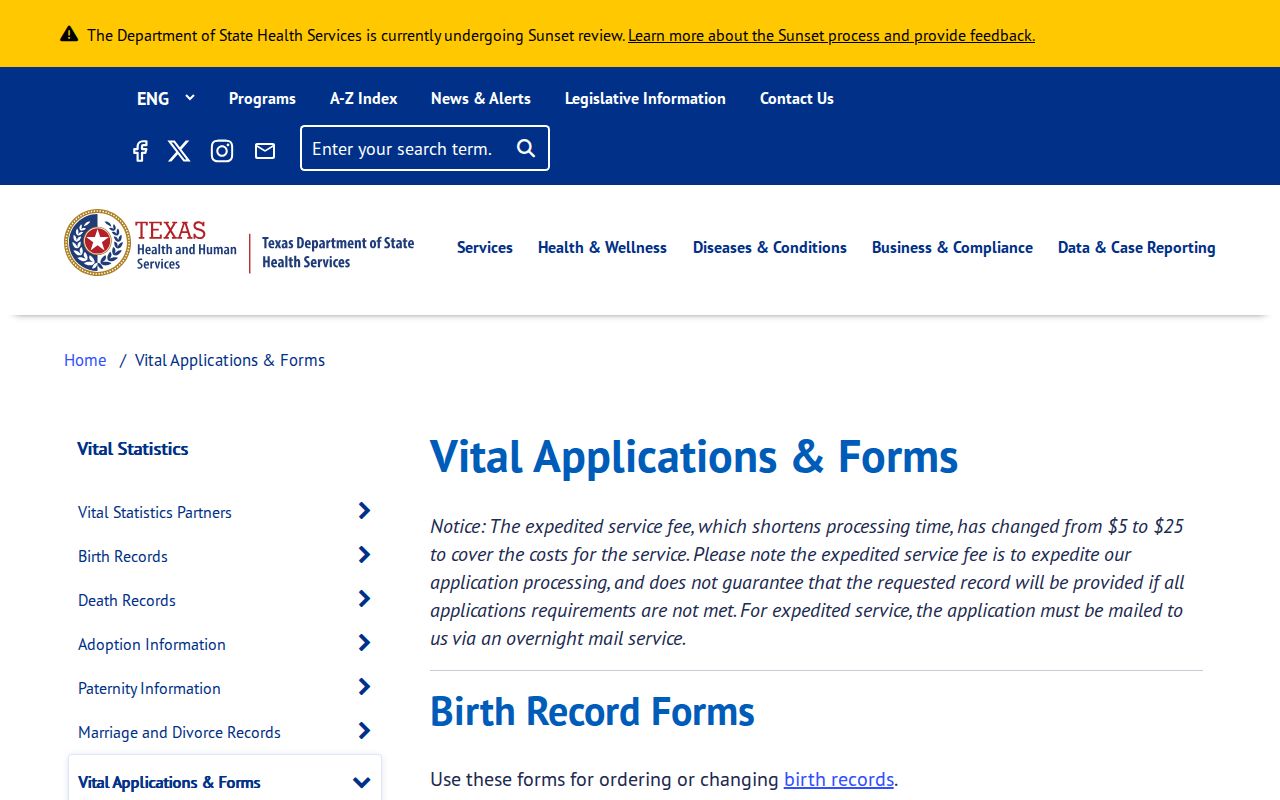
The form directory helps distinguish an official request from a name search and directs a researcher to the product that matches the event.
Dallas Voter Records Need Context
Texas directs registration questions to its “Am I Registered?” instructions, which recognize VUID, Texas driver-license information supplied during registration, and a first-and-last-name route. The local fallback is the Dallas County voter registrar. Public election information is not a free-form current household directory. Name, date of birth, voter ID, and elections voted have different treatment from Social Security, Texas driver-license, and DPS identifiers.
Address suppression and confidentiality protections matter. Eligible protected officials and their families may use the Texas SOS affidavit process, and Address Confidentiality Program participants use confidential voter forms. A record can also lag a move or reflect election administration. A name result should therefore be compared with a lawful second source instead of treated as a current residence conclusion.
VoteTexas registration information describes the official lookup methods.
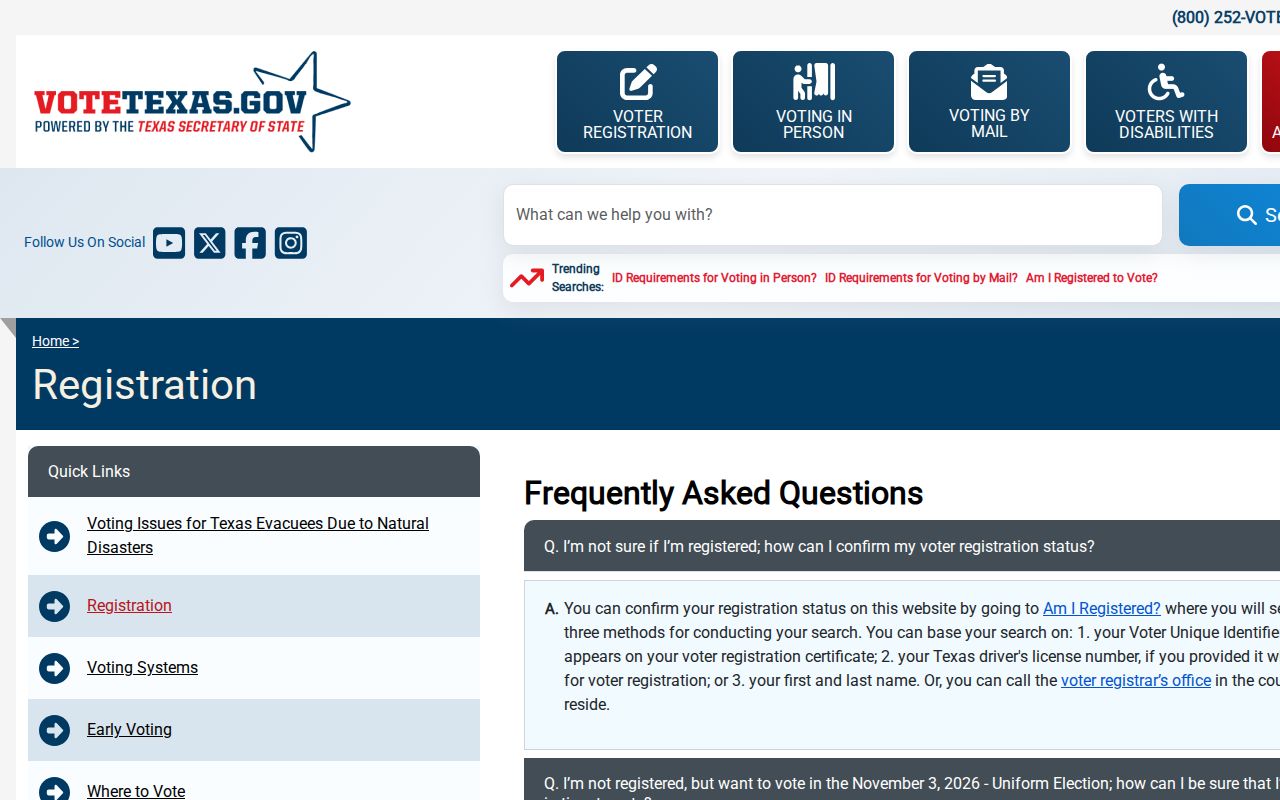
The screenshot is a reminder to use official instructions and the registrar, not to publish credentials or protected address details.
Dallas Custody Searches Are Dated
The Dallas County Jail Lookup has separate name, booking-number, and case-number modes. Its name route requires first name, last name, race, and sex, with date of birth optional. Texas prison custody belongs in the TDCJ system, not the county jail route. A booking, transfer, release, or warrant status can change quickly, so record the search date and never use an empty result as proof of absence.
Dallas County Jail Lookup is the county custody source.
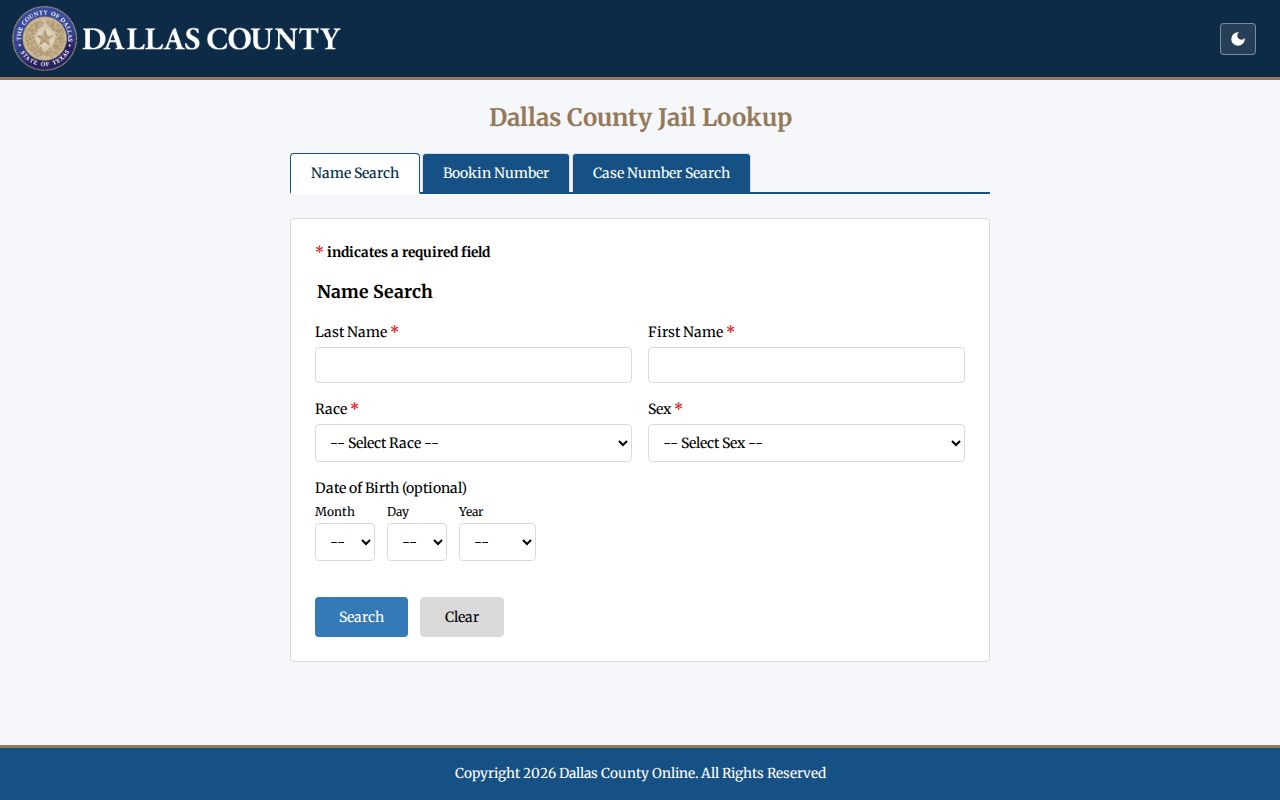
The jail screen separates its search modes, which is useful when a case number is known but a common name is not enough.
The Dallas County wanted-person search adds name, ZIP, case, citation, plate or VIN, and demographic modes. The Sheriff warns that results may not be current and tells users not to apprehend anyone.
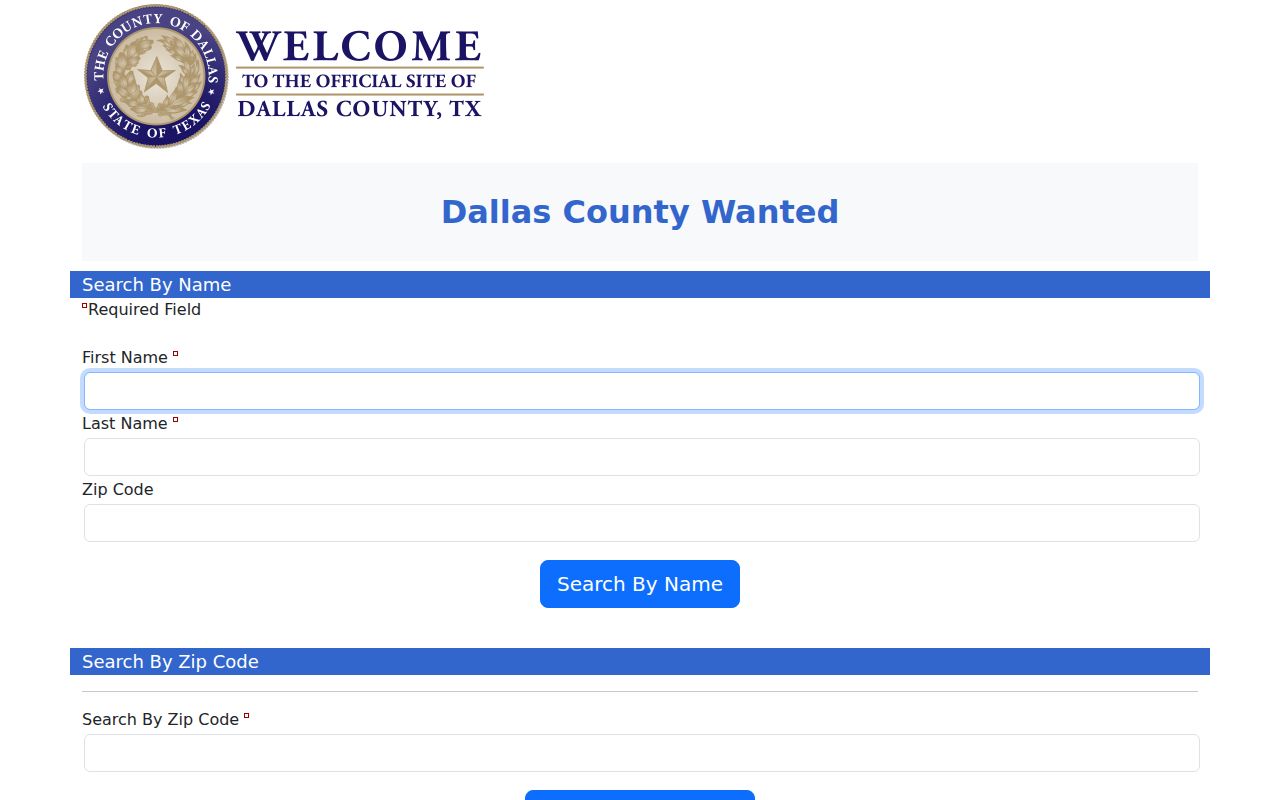
That warning is central: a dated law-enforcement record is not a safe way to identify a present Dallas household or confront a person.
Dallas Name Matches in Business Records
A business or professional record can help distinguish two people with similar names, but it should not be used to infer a private residence. SOSDirect provides entity status, copies, images, and certificates; its research capture lists a $1 search cost. The Texas Comptroller’s taxpayer route can search a taxpayer ID, a five-digit ZIP in Location mode, or an individual or legal name. Licensing portals use their own fields and data scope.
Use a legal name, city or county, record status, and date to narrow an identity question. Then verify any connection with an independent record that fits the question. SOS records also redact sensitive financial and identifying fields, which is a useful reminder that public filing access has boundaries.
Texas Comptroller taxpayer search illustrates the state’s location and name modes.
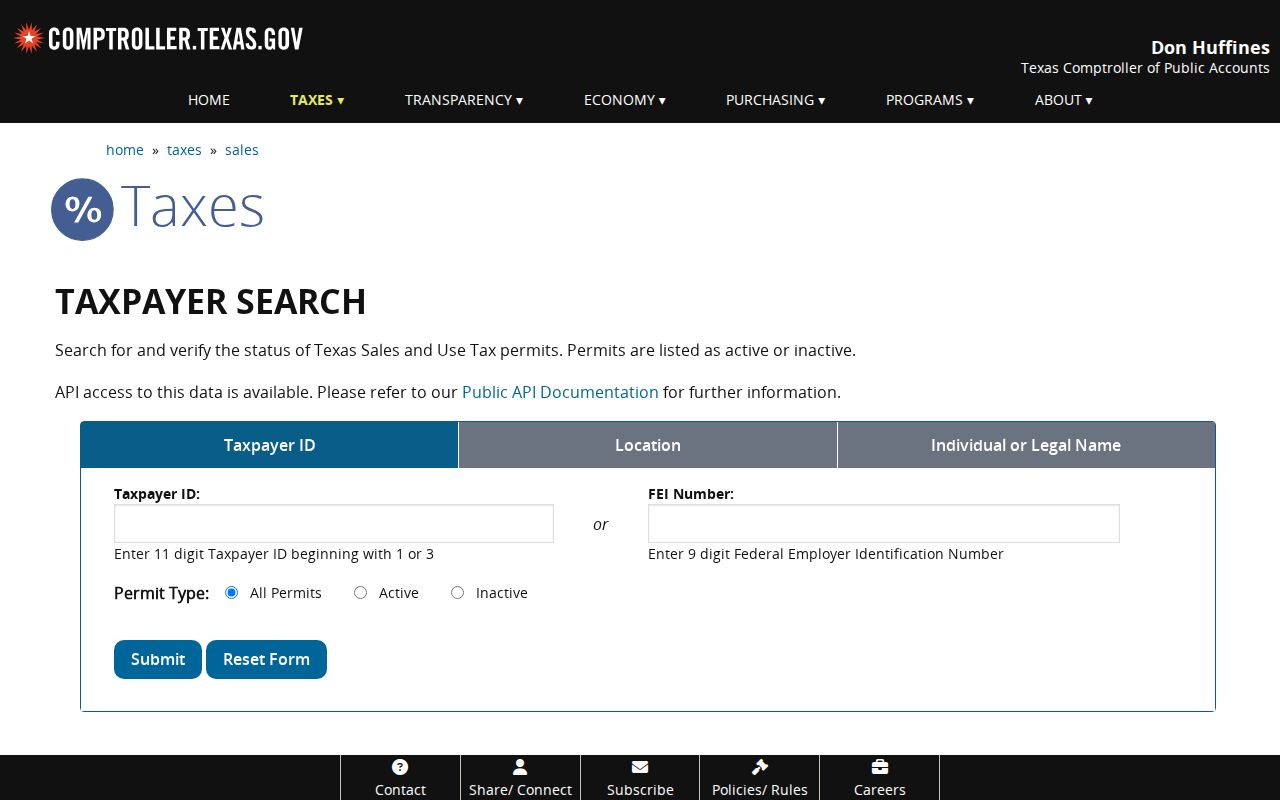
A taxpayer or entity match is a business-record lead, not evidence that someone lives at a listed business or mailing address.
Dallas ZIPs Choose the Right Route
A ZIP Code is delivery geography, not a municipal or county boundary. USPS By Address gives the practical delivery check for a particular address. DCAD’s ZIP layer is a polygon reference layer with a ZIPCODE attribute that is helpful for map context. A street can cross city, school-district, county, or postal boundaries, so a postal city label should not decide which Dallas office owns a record.
For a ZIP-wide question, use the map layer to understand the area, then confirm the exact address with USPS and the parcel’s city and legal description. Dallas’s specialized 753xx codes should not be treated as ordinary neighborhood polygons. The Dallas ZIP code directory provides the area-by-area method without turning postal geography into a resident list.
- Parcel
- A mapped tract tracked by an appraisal account and legal description.
- Index
- A searchable guide to records, which may not include the document image.
- Criss-cross directory
- A reverse directory arranged from address to printed name.
- Resident roll
- A record set that associates people with a specific purpose, date, and access rule.
Historical Dallas Resident Directories
Dallas Public Library’s History & Archives at the J. Erik Jonsson Central Library holds city, telephone, and criss-cross directories in print and microfilm, plus newspapers, yearbooks, maps, manuscripts, and older county-agency materials. The digital collection has a 1875 Dallas directory date view, while official historical material identifies a Worley’s Dallas Directory run from 1898 through 1958. Those are anchors, not a promise that every intervening volume survives or is online.
A standard alphabetic directory runs from name to address. A street or criss-cross volume runs from address to printed name. The Library of Congress inventory identifies Dallas reverse-directory holdings for 1936 and 1960 through 1994, with possible gaps. A printed result should be dated and compared with a newspaper, deed, map, or vital/cemetery record. The full collections and entry-reading method belong in the Dallas city directory.
Dallas Records Begin in 1846
Dallas County was created by the first Texas Legislature on March 30, 1846. County Clerk Central Records says its custody begins with county establishment and includes historical deed books, Commissioner’s Court records, closed court records, and microfilm. The Old Red courthouse history adds a caution: a brick courthouse was rebuilt after an 1860 fire, but that fact alone does not prove the loss of any particular record series.
For early material, ask for the record group, year, and reel instead of assuming a web search covers it. The Texas State Library guide identifies Dallas district civil case papers from 1846 to 1938, direct and reverse indexes, district minutes, and inquest material. Dallas Public Library is also a Regional Historical Resource Depository. That local custody trail is often more useful than repeating an unsuccessful online name search.
Note: The County’s April 2026 Central Records move notice limits some in-person years and temporarily pauses email requests, so verify current access before travel.
Dallas Privacy Comes Before Results
Texas public-information access is governed by Texas Government Code chapter 552, but a public route does not make every field available. Birth and death access has age thresholds. Voter, court, law-enforcement, driver, financial, and protected-victim information can be confidential, redacted, sealed, suppressed, or restricted. The Texas Address Confidentiality Program also supplies a substitute address route for eligible survivors of family violence, sexual assault, trafficking, stalking, and child abduction.
Use minimum necessary details, keep a source URL and date, and stop when a portal identifies protected information. Some voter addresses are suppressed, and the absence of a record does not disprove residence. Texas law permits personal, lawful research, but it does not permit stalking, harassment, fraud, impersonation, or attempts to defeat confidentiality protections.