
Dallas City Directory Collection Paths
Dallas directories are spread across shelves, microfilm, page-image collections, and archival finding aids. The Dallas Public Library History & Archives keeps city, telephone, and criss-cross directories in print and microfilm, alongside newspapers and older permanent county-agency records. Online material is useful for locating an edition, but it does not establish an unbroken run. The locally documented anchors include a Portal to Texas History item dated 1875, inspected directory pages from 1918, 1924, 1928, and 1938, and a Worley's Dallas Directory reference from 1898 through 1958. Ask for a title and a year before assuming a volume is available.
| Dallas collection | Years located | Where held | How to use it |
|---|---|---|---|
| Digitized Dallas directories | 1875 date view; pages from 1918, 1924, 1928, and 1938 inspected | Portal to Texas History | Free page images and OCR, with image checking |
| Worley's Dallas Directory | 1898-1958 cited in historic material | Local historical research routes | Name, street, business, and civic clues |
| Criss-cross and reverse directories | 1936 and 1960-1994 in the LOC Dallas inventory | DPL and Library of Congress routes | Address-to-occupant trail, with year gaps possible |
| Telephone directories and yearbooks | Exact local run not located | DPL print and microfilm collections | Address, school-year, and contemporaneous publication clues |
Each collection answers a different question. An alphabetic directory moves from a name to a printed address. A street or reverse section begins with the address. Telephone books and yearbooks can add a date or school connection, but an unlisted household may be absent. Note: Dallas directory gaps should be recorded as gaps, never filled by guessing between editions.
The Portal to Texas History Dallas directory collection is a useful first look at digitized material.
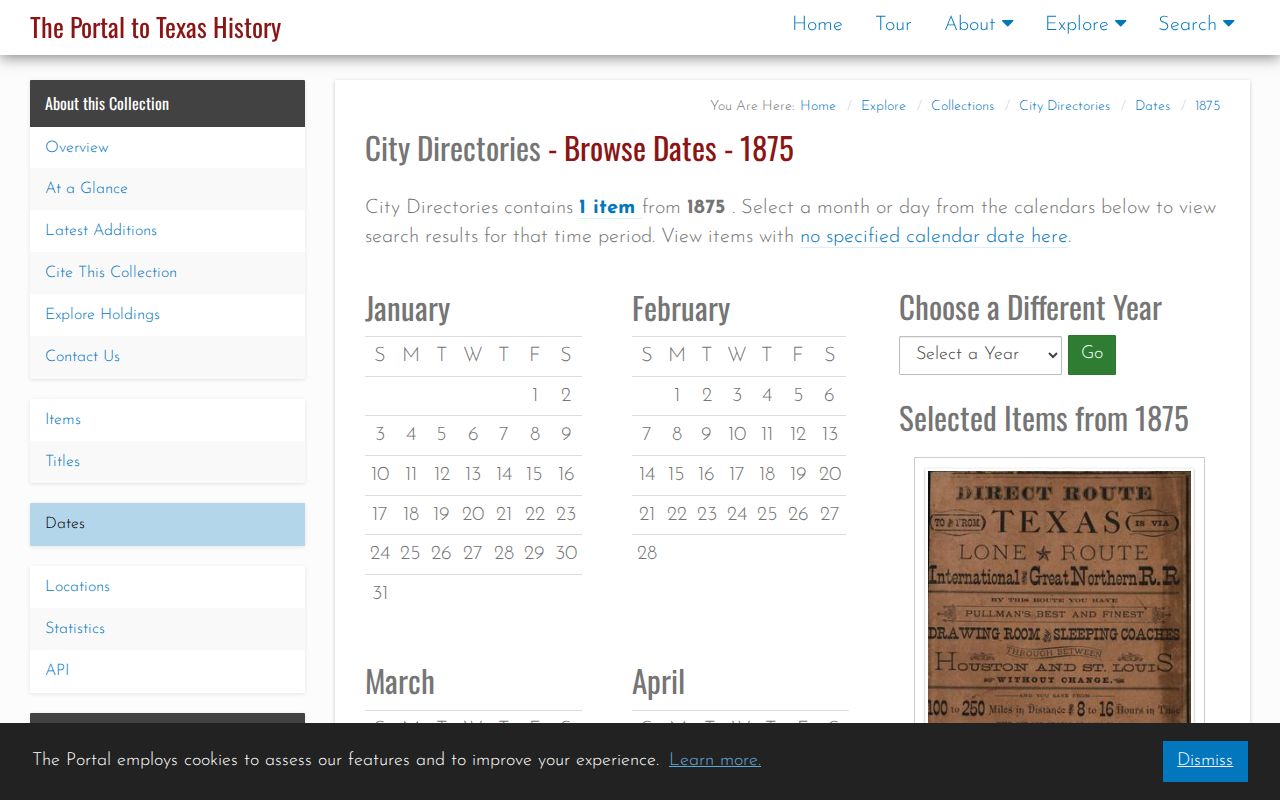
Its page images give a researcher a source to cite by edition and page, while the library routes remain important for volumes that are not online.
Dallas Directory Library Shelf
The J. Erik Jonsson Central Library makes the Dallas directory search more than a web search. Its seventh-floor History & Archives area lists more than 60,000 books, more than 1,500 newspaper and periodical titles, print and microfilm newspapers, directories, yearbooks, maps, photographs, and manuscripts. Dallas Morning News coverage from 1885 to 1984 is available through the library card or in-library routes it identifies, while its Newspaper.com Texas description reaches from 1842 to 2024. The eighth-floor Genealogy & History area adds the Lloyd DeWitt Bockstruck Genealogy Collection, maps, and atlases that can help test an old address or boundary.
Bring the city, exact year, and directory type: alphabetic, telephone, criss-cross, reverse, or street section. At the desk, write down the publisher, edition, page, section, and abbreviation key. Preserve rear-unit, rural-route, and vacancy marks exactly. Then pair the entry with a newspaper item, a deed-index result, an appraisal card, or a permit record. A precise transcription makes a later check possible.
The library's Dallas history and archives page shows the local-history research setting behind these local holdings.
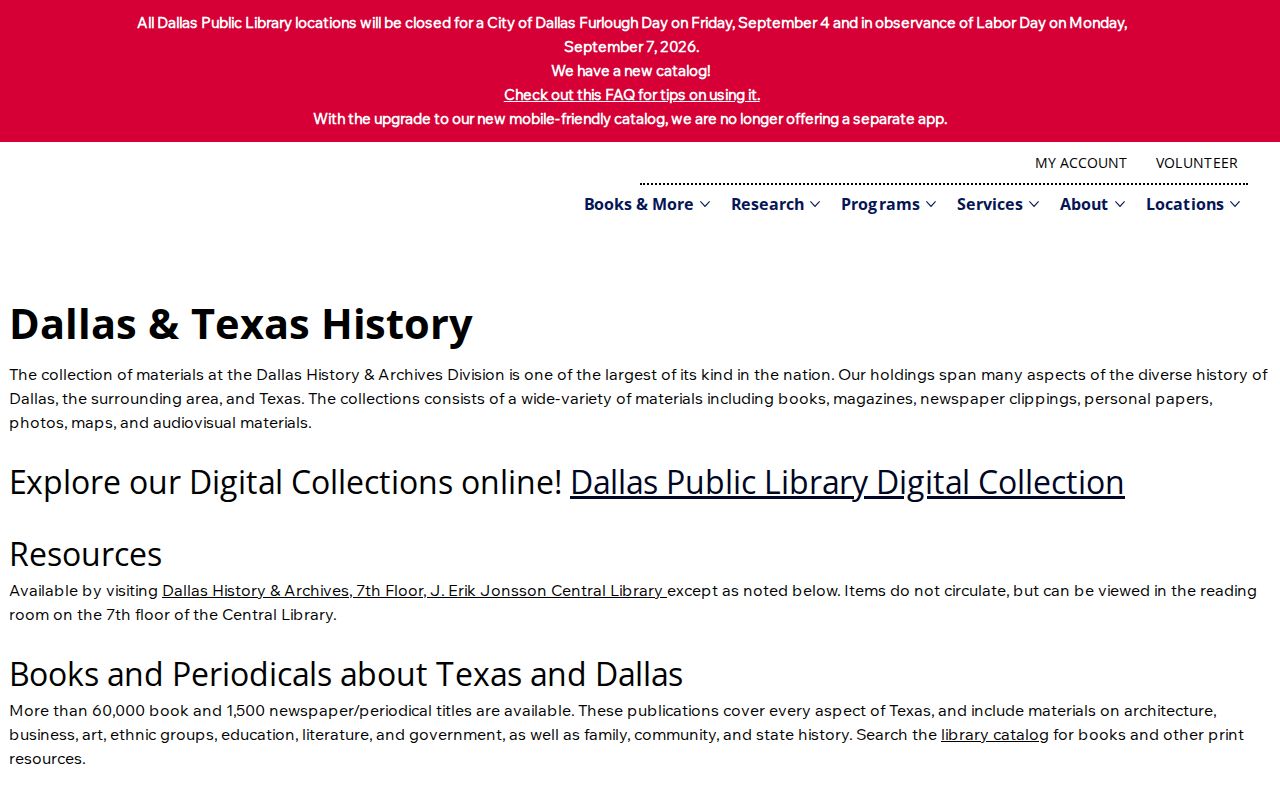
The library route is also a fallback when an online search shows only a fragment of a needed volume.
Dallas Directory Pages Online
Digitized Dallas directory pages need two passes: read the OCR for speed, then inspect the image. The 1938 street-listing sample shows street names and numbers, occupants or businesses, rear-unit indicators, vacant entries, intersection notes, OCR text, and the page image. The 1924 street sample displays numbered addresses, abbreviated occupants, adjacent entries, and an image identifier. These are strong ways to follow a short street segment from one edition to the next. A vacant line is an observation in that edition, not evidence of a continuing condition.
The Dallas Public Library eighth-floor collection supplements those scans with genealogy references, maps, and atlases. It is especially useful when the page image gives an older street number that does not match modern mapping.
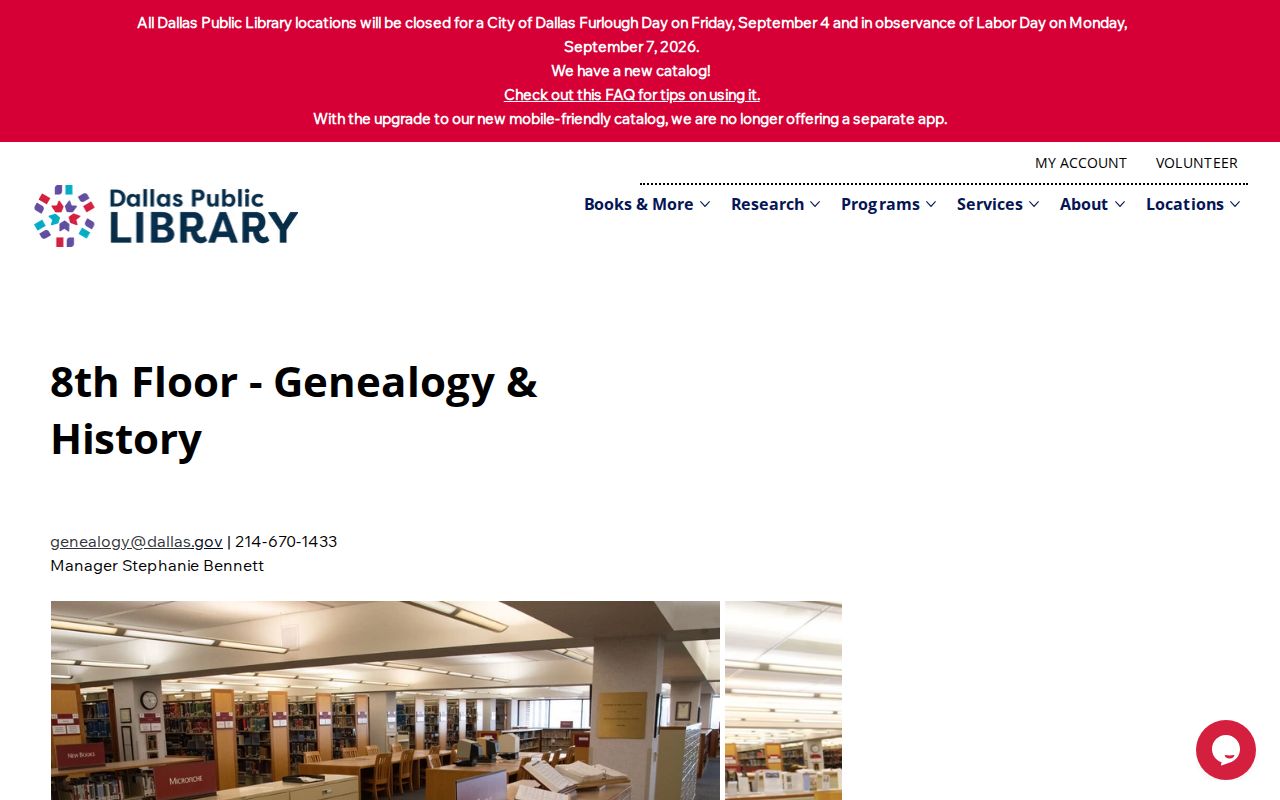
Consulting the map and atlas material before assigning an old number to a current parcel avoids an easy but misleading match.
Reading a Dallas Directory Entry
A Dallas directory entry is a printed clue, so retain its marks before translating it into a search. The inspected 1928 alphabetic page includes surname and given name, a parenthetical household identifier, an h or r address marker, street address, business reference, OCR text, and a page image. A mark can vary by edition. Do not expand an abbreviation until the key in that particular volume supports the reading. The directory can connect names and places, but it does not prove title, legal occupancy, or that every person in a home was listed.
| Name | Copy the surname, initials, and parenthetical identifier as printed. |
|---|---|
| Address | Keep number, direction, street, unit, rear marker, and any intersection clue. |
| Printed reference | Record business or occupation wording only as a historical entry detail. |
| Abbreviation | Check the edition key before deciding what an h or r mark means. |
| Page evidence | Save edition, page image, and OCR separately because OCR can misread names. |
- Criss-cross directory
- An address-ordered directory that helps move from a street number to a printed occupant or owner-style listing.
- Householder index
- A name-oriented listing that may identify the person attached to a household address in that edition.
- Abbreviation key
- The volume's own explanation of its shortened marks. Photograph it before interpreting an entry.
Compare names and exact address forms across two editions before making a family-history conclusion. A changed initial, a rear unit, or an omitted street type can change the search result.
Dallas Reverse Directories by Address
Later Dallas reverse directories add a route for house history. The Library of Congress address-directory guide identifies Dallas material for 1936 and for 1960 through 1994, while the Dallas Public Library holds city, telephone, and criss-cross directories in print and microfilm. Start with the number and street as printed, then compare adjacent numbers and the next available edition. That approach can distinguish a new surname from a change in unit notation or a street-segment shift.
The Library of Congress criss-cross directory guide explains the address-order format and cautions that individual years may be missing. For a current parcel or a full named-street workflow, use the separate Dallas Street Directory route after the historical address has been normalized.
Dallas Genealogical Society's directory resource guide points researchers toward the local history collections and their supporting tools.
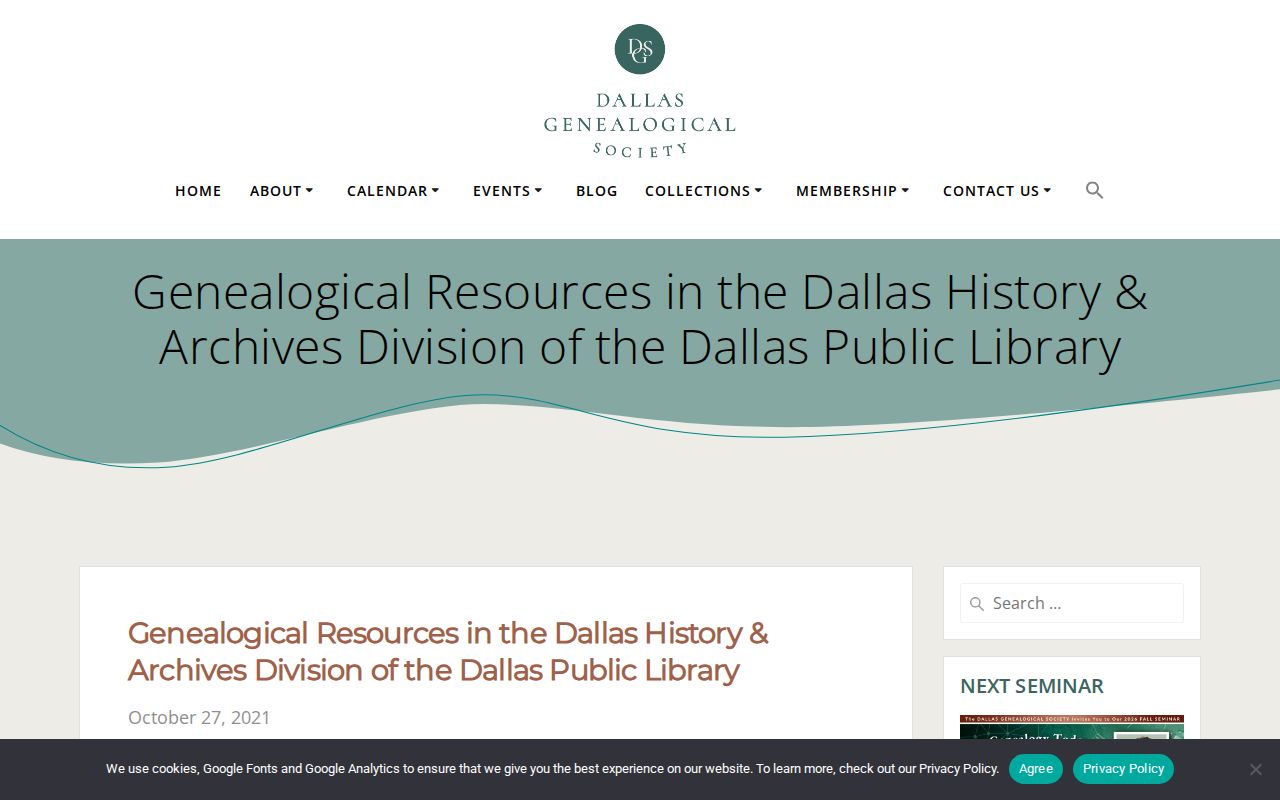
Those local guides are helpful when a printed volume, cemetery index, newspaper, or archive source must fill a directory gap.
Dallas Directory Archive Routes
When the needed Dallas volume is absent online, move through the archive chain rather than treating a blank search as a dead end. The Dallas Historical Society's G.B. Dealey Library holds photos, documents, artifacts, books, and periodicals, with named collections identified through its finding aids and TARO repository. Access is by appointment Tuesday through Friday from 10 to 4. The society offers short staff email research without charge and reports that extensive research is fee-based. Request the finding-aid and collection title before planning a visit.
The Dallas Historical Society collections page provides the official route into that appointment research library.
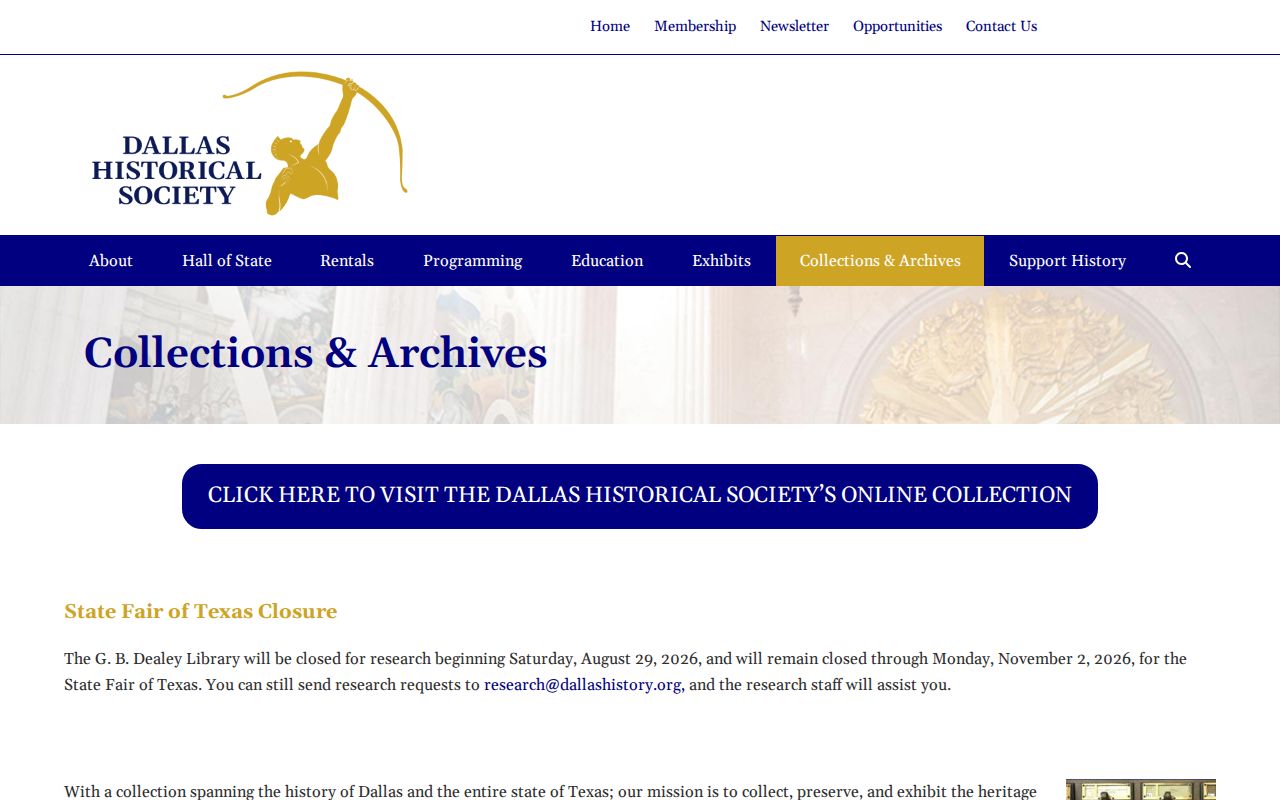
Historical Society holdings can add manuscript or institutional context when a directory gives only a name and address.
Dallas Municipal Archives is another key route for old grids, street-history maps, council records, plans, and collection guides. Its materials help reconcile pre-1911 address forms before a directory entry is compared with a modern parcel.
The Dallas Municipal Archives describes the record groups available for that street and map work.
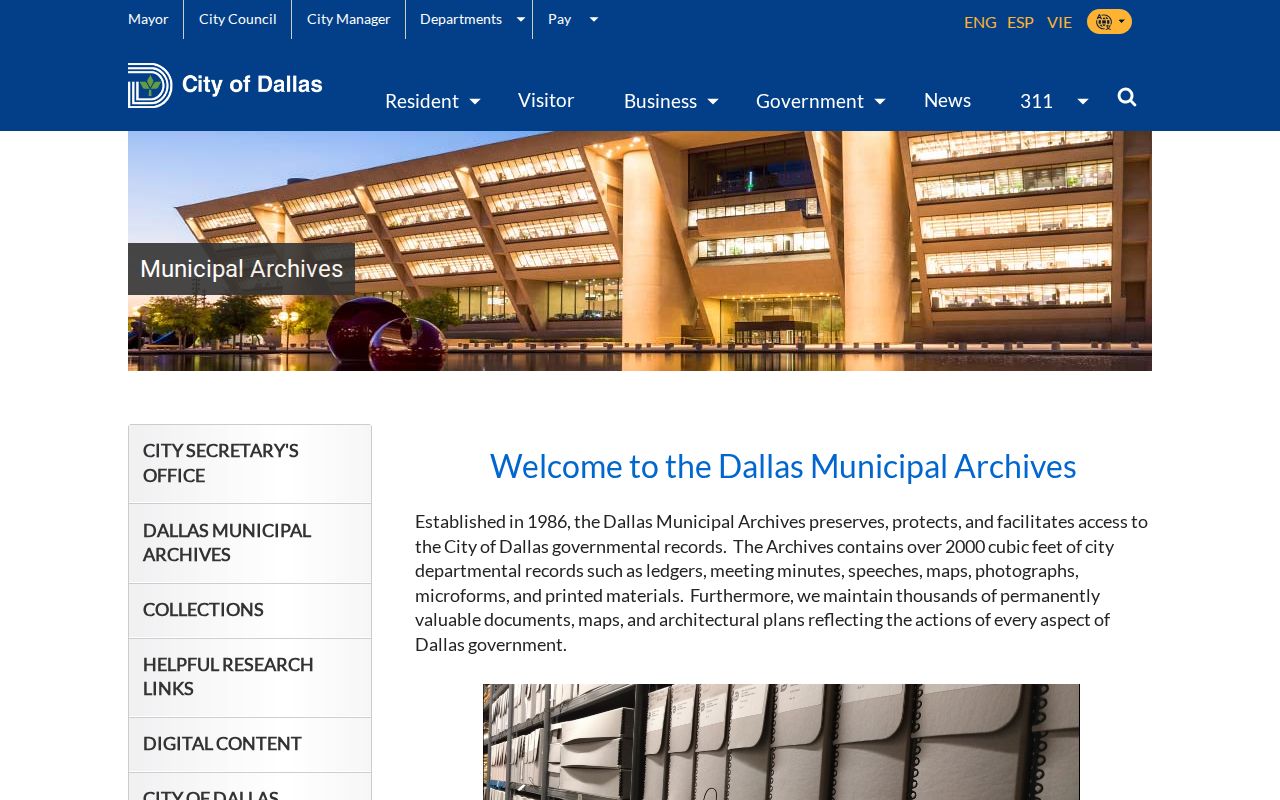
Archive maps and planning material supply context for a printed address; they do not turn a directory line into proof of present residence.
Dallas Directory Time Markers
Dallas directory research has a local timeline worth keeping beside the volumes. Dallas County began in 1846, and county records are described as being in custody from that year. The city grew through the railroad era, then through major mid-century expansion. Historical Dallas street material flags numbering changes around 1891 and 1892 and a major downtown renumbering in 1911. Those changes explain why a directory number can be accurate for its year yet fail a modern address search.
- 1875: the earliest digitized Dallas directory anchor located in the Portal collection.
- 1898-1958: the historically cited Worley's Dallas Directory span.
- 1911: a major downtown renumbering requires map and street-history checking.
- 1936 and 1960-1994: Dallas reverse-directory years identified in the Library of Congress inventory.
- 1945-1960: the city area grew from 50.6 to 283.3 square miles, adding another reason historic and current boundaries can differ.
Note: A dated directory and a dated map should be read together before an old Dallas number is assigned to a present address.
Trace Dallas Directory Households
For family history, begin with a name or address in the closest known year and build a dated trail. Dallas directories work best when they are paired with an independent record. The library recommends comparing entries with newspapers, the County Clerk deed index, a tax or appraisal card, and city permits. A newspaper obituary, marriage notice, or civic item can bridge a date between directory editions. A deed or probate record may anchor property or estate facts, while a census schedule can help place the household at a decade boundary.
- Locate the first appearance in an alphabetic or street listing and save the page image.
- Follow the spelling, initials, address, unit marks, and adjacent entries through later available editions.
- Use a criss-cross section to inspect the same address and nearby numbers for that date.
- Pair directory years with the matching available census schedule, then test the trail against newspapers or recorded property material.
- Record a disappearance as uncertain until an obituary, cemetery, probate, deed, or later directory supplies a dated explanation.
A person may have moved, died, changed a printed name, become unlisted, or appeared at a different unit. A directory is valuable because it preserves the published observation, not because it settles every question by itself.
Dallas Directory Evidence Limits
Use historic Dallas directories for family history, estate research, reunion work, and local history. Keep the minimum personal detail needed for the record question, and do not use historical entries to track, harass, or harm a living person. A title party, a postal address, and a directory listing are different kinds of evidence. Verify important facts with the office or archive that holds the underlying record.