
What a Dallas Resident Lookup Checks
A Dallas resident lookup starts by matching the question to the record. The Dallas Central Appraisal District property search can connect an owner name, account, situs address, owner mailing address, legal description, exemptions, and taxing jurisdictions. The Dallas County Official Records Search instead tracks recorded legal parties and instruments. Neither source identifies every person living at a Dallas property. Dallas court, voter, and vital sources add different kinds of evidence, each with its own limits and custodian.
| Dallas record | What it can confirm | Custodian | Access route |
|---|---|---|---|
| DCAD parcel card | Account, situs, owner mailing address, and legal description | Dallas Central Appraisal District | Property, owner, address, account, business, or map search |
| Recorded instrument index | Grantor, grantee, document type, date, and instrument number | Dallas County Clerk | Free official index; image or certified-copy route is separate |
| Case index | Dallas party search and case-routing details | Dallas County courts and clerks | Odyssey, clerk counter, or the court that holds the file |
| Vital index or verification | Recorded birth, death, marriage, or divorce event lead | Texas DSHS or Dallas-area custodian | Index, verification, or eligible-copy process |
| Voter registration | Registration and election-record details | Texas SOS and Dallas County Elections | Official lookup or registrar fallback |
Begin with the source tied to the fact already known. An address fits DCAD; a recorded sale fits the Clerk’s index; a case number fits the court. A name alone is a lead, not a conclusion. Note: Dallas records use different roles, dates, and custodians, so one matching name should always receive an independent check.
Start a Dallas Resident Lookup
Write down the full name in the order it is known, then keep the middle initial, suffix, alternate spelling, approximate date, city, and ZIP beside it. Dallas County includes many municipalities, and a Dallas street can cross their boundaries. A Dallas date or location sharply narrows a name search. It also stops an old directory listing, a same-day court entry, or a business record from being treated as current evidence.
- Search the name and known address in the Dallas DCAD system, then save the account number, situs, mailing address, and legal description.
- Use the owner or legal-party name in the Dallas County Clerk index and record the document number, party role, type, and recorded date.
- Run a Dallas court or voter search only for its specific question, then compare the court location or election date with the earlier record.
- Stop when two plausible people remain. A second independent field is needed before assigning a person to a Dallas address.
For Dallas historical identity, a year-specific directory, newspaper, obituary, or cemetery record can supply a time marker, but it does not establish present residence. The useful result is a documented Dallas chain of sources, not a broad collection of names.
Dallas Parcel and Deed Roles
Dallas DCAD and the Dallas County Clerk answer complementary questions. DCAD identifies the appraisal account and its situs address, while the Clerk records an instrument involving a grantor or grantee. A grantor transfers an interest; a grantee receives one. Those roles can help distinguish similar names, but neither proves occupancy. The owner mailing address may be different from the parcel situs, and an entity can own the property.
That distinction matters in Dallas. The research sample pairs a Carrollton situs with a Richardson mailing address, along with an entity owner and a legal description. Treat each field as its own fact. Use the parcel account to find the right property, then use the recorded instrument number to request the image or certified copy from the proper office if the underlying document is needed.
- Situs address
- The physical location DCAD assigns to the parcel, which can differ from a mailing address.
- Legal description
- The lot, block, subdivision, acreage, or other recorded land description used to identify property.
- Grantor and grantee
- The parties shown as transferring and receiving an interest in a recorded instrument.
Note: A parcel account can anchor a property search, but it cannot by itself identify the person living there.
Search Dallas Court Records
The Dallas County Odyssey portal is the starting point for county and district court case information, including civil, family, and probate routing. Its Smart Search accepts a record number or a name in Last, First Middle form. The portal also offers court location and search-mode controls. A same-name hit needs a court location, party role, date, case number, or another record before it can support a Dallas resident lookup.
| Odyssey field | Verified use |
|---|---|
| Search Criteria | Enter a record number or a name in Last, First Middle form. |
| Search By | Choose Smart Search, attorney, business, cross-reference, case-number, or citation mode. |
| Court Location | Leave at all locations or narrow to a portal-controlled court choice. |
| Hearing search | Use location, hearing type, search type, sounds-like, criteria, and date-range controls when applicable. |
Dallas Municipal Court’s search is separate. Its visible options include citation number, driver license, vehicle information, and name, with first name, last name, and date of birth in name mode. Some citations are unavailable online. A municipal citation connects a name to a court event, not to a current address or a final disposition.
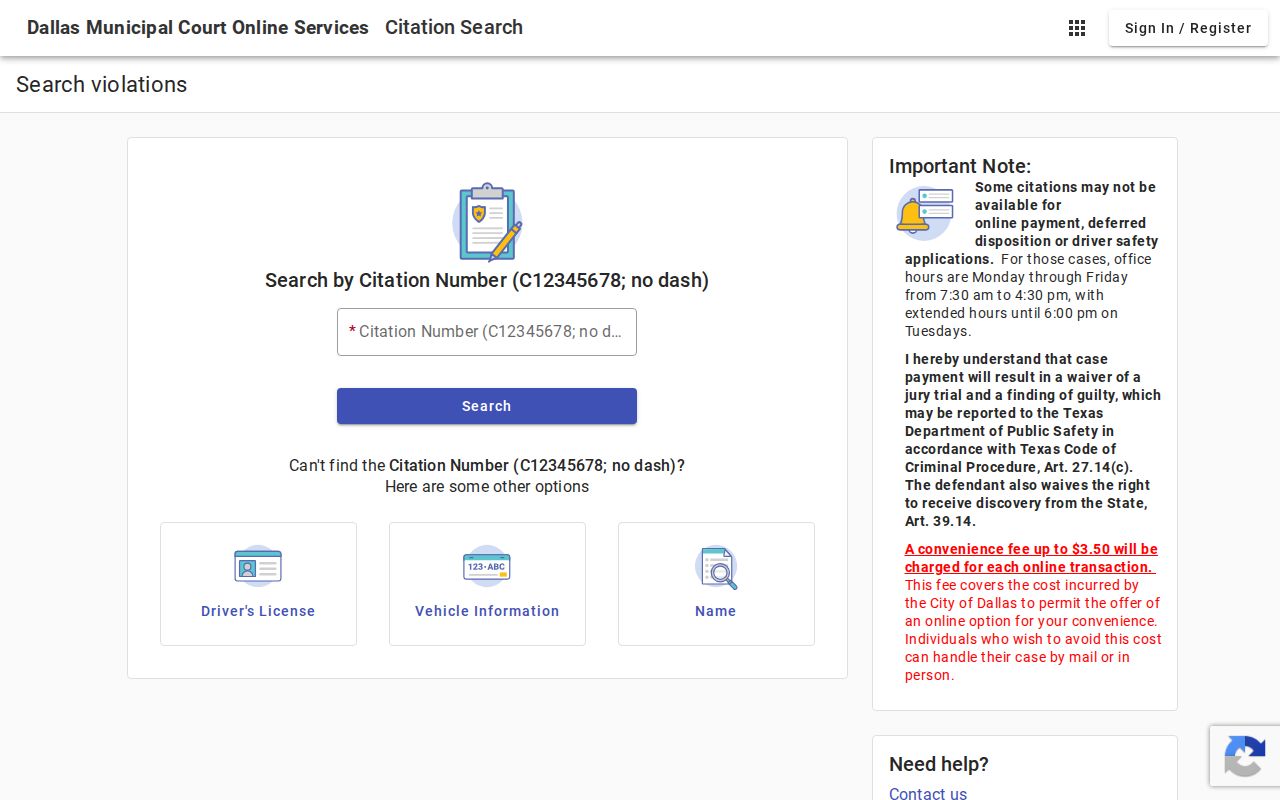
The separate municipal screen illustrates why Dallas court research must follow the court type instead of assuming one countywide name database holds every file. Dallas District Clerk civil and family requests follow that office, Dallas County and probate records follow County Clerk routes, JP files remain with their precinct offices, and federal cases use PACER.
Note: Court portal access and document availability depend on the court, case type, and confidentiality rules.
Dallas Vital Record Routes
Texas vital indexes are useful for dates and identity leads, but a certified record follows a different path. Texas Government Code §552.115 opens birth records after 75 years and death records after 25 years. Before those thresholds, a qualified person or documented tangible interest is required. Dallas city-limit birth and death records have a Dallas city route for some products, while Dallas County suburb events may use the County Clerk. State verification is a third product and is not a substitute for every local certified copy.
The Texas DSHS access procedures explain the public-access thresholds and request paths. County mail applications require the requested person’s details, relationship, mailing information, and purpose; no email applications are accepted. The County Clerk’s Records Building counter and mail route are the local fallback when an eligible copy is needed.
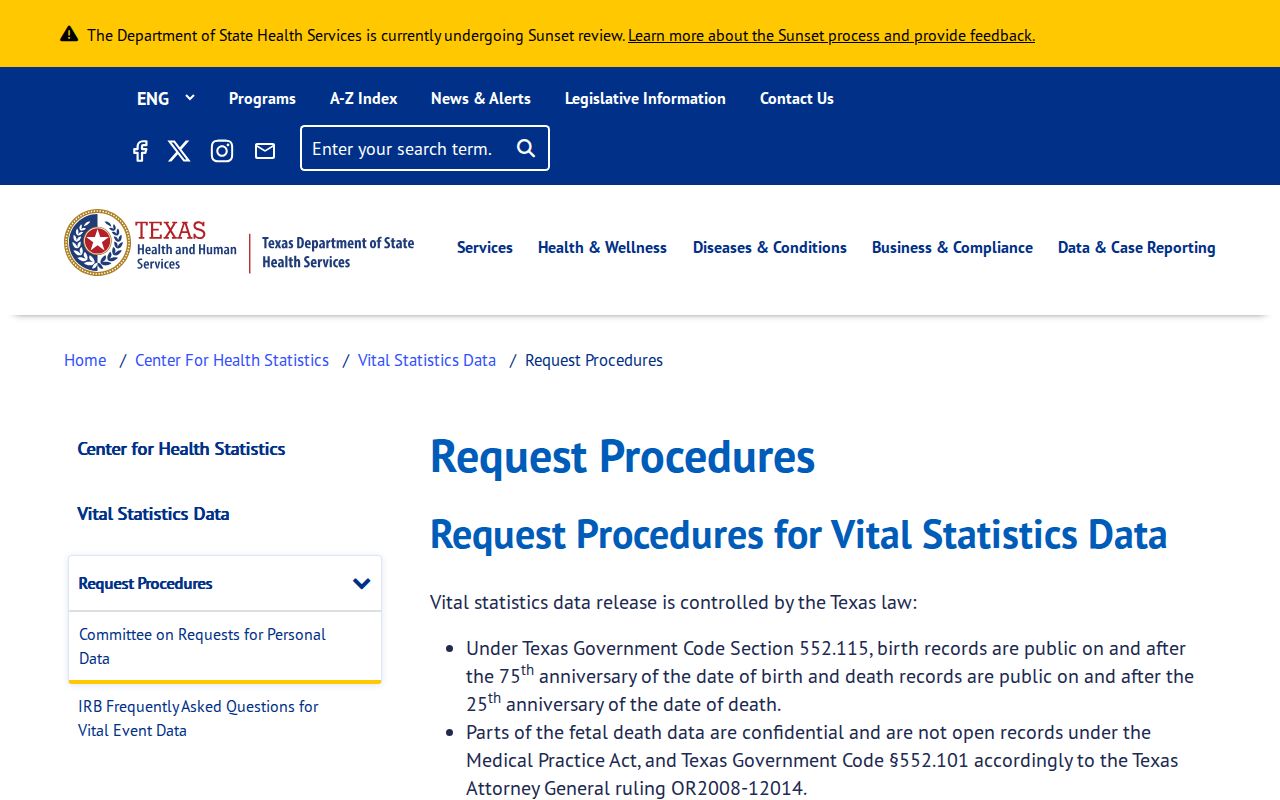
Use the Dallas access route that matches the event and eligibility. A Dallas city-limit event, a Dallas County suburb event, and a statewide verification can point to different custodians even when the name is the same.
DSHS birth and death index guidance lists a digital birth index from 1925, a digital death index from 1965, and microfiche indexes beginning in 1903. The indexed fields include surname, given names or initials, event date, county, and sex. An index lead should be checked against a second record before it is assigned to a Dallas resident.
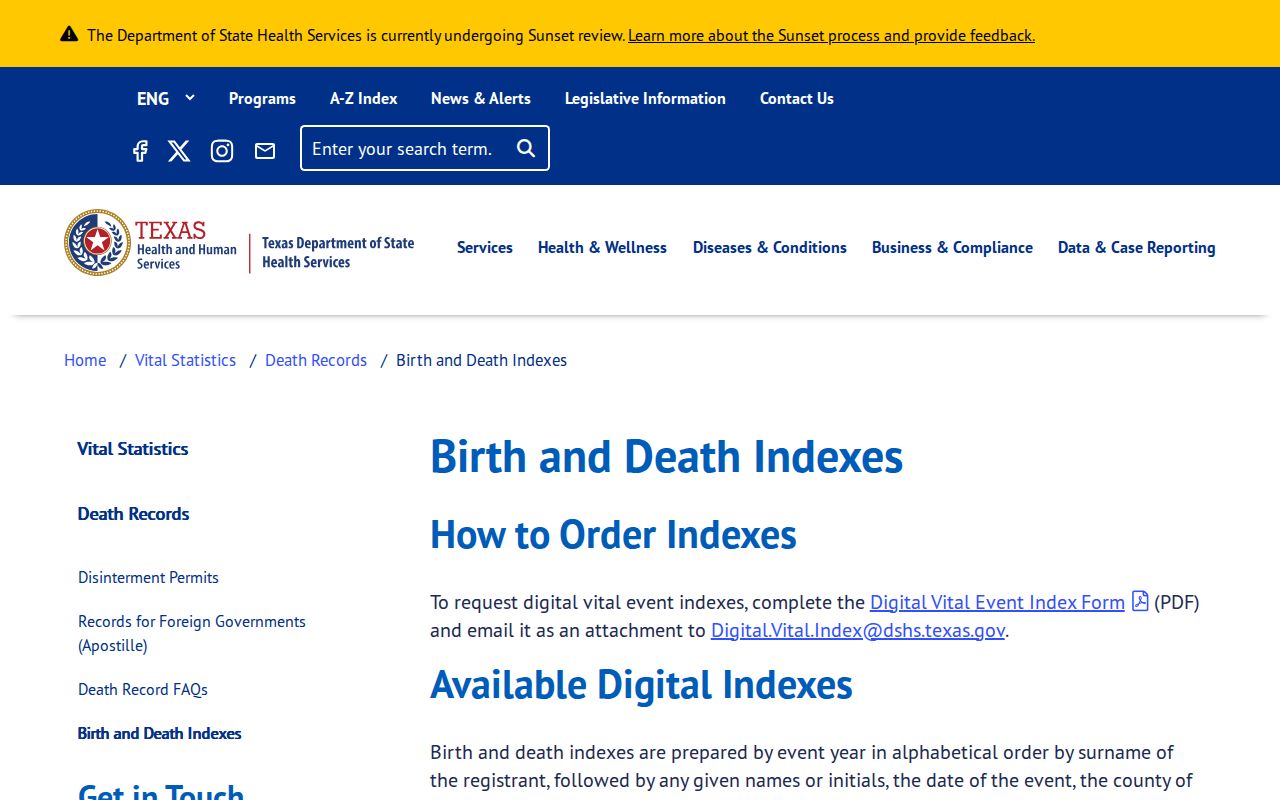
For Dallas marriage and divorce records, DSHS provides verification based on local reports, while certified marriage licenses come from the Dallas County Clerk and certified decrees come from the District Clerk.
Dallas Voter Lookup Limits
The official Texas voter lookup uses a VUID, a Texas driver license number supplied at registration, or first and last name. The public layer can include name, date of birth, voter-identification number, and elections voted. It does not reveal how someone voted, and the Social Security, Texas driver-license, and DPS identification numbers are confidential. Treat registration as an election record, not as a free-form current household list.
A name-only match is weak. Compare the county, date of birth, VUID where lawfully available, and election date. If the online route fails, Dallas County Elections can explain registration status, card delivery, or address correction. The county’s historical canvass files are dated election snapshots, not a continuing Dallas resident lookup source.
Note: Voter status should always be tied to the date and stated purpose of the election record.
Dallas Custody Search Dates
Custody information needs a source date and the correct system. The Dallas County Jail Lookup covers jail status, while the statewide Texas Department of Criminal Justice offender search accepts a name, SID, or TDCJ number. A jail record and a prison record do not mean the same thing, and either status can change. Use the result only for the record-specific question, then verify related court information through the clerk or court portal.
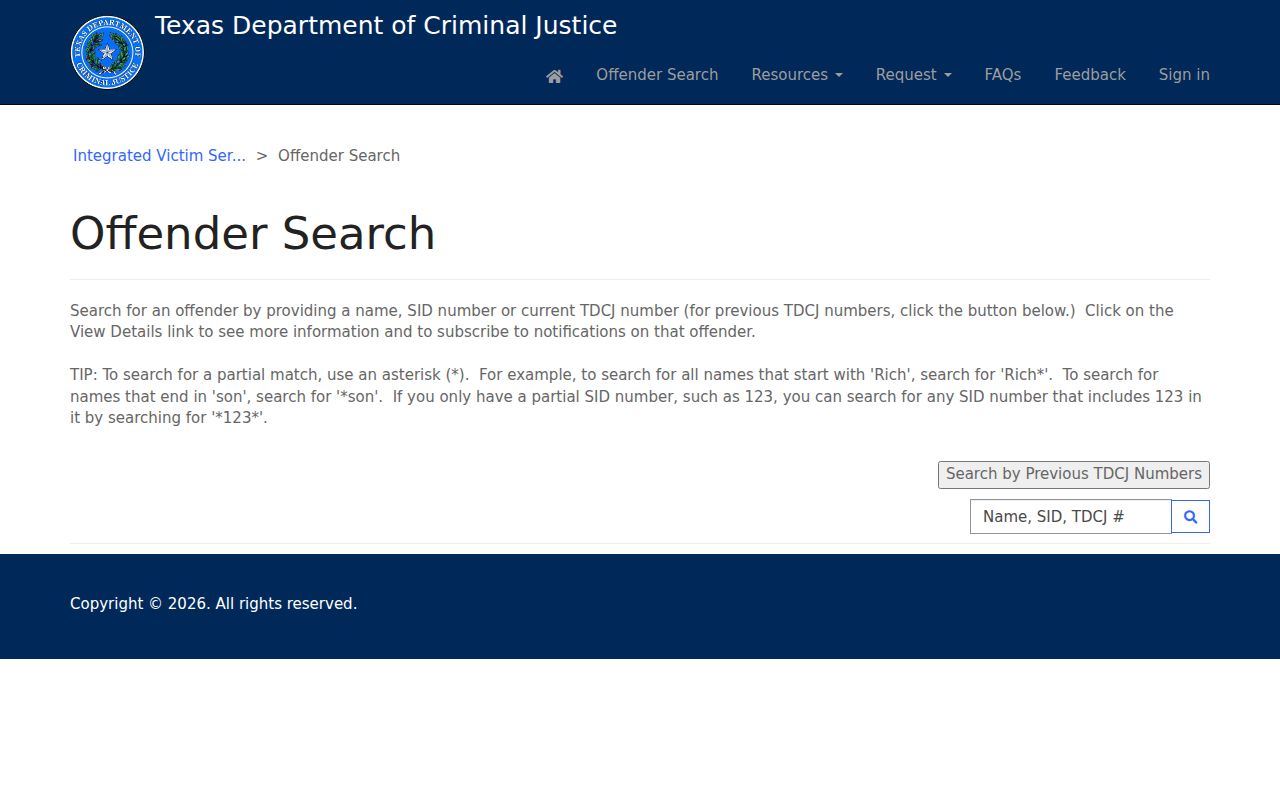
The search screen is a reminder to preserve the search mode and date. It does not establish a person’s home, family relationship, or court outcome by itself.
Dallas Records During the Move
Dallas County Central Records posted a temporary service notice effective April 6, 2026. During the move, email requests and phone follow-up are unavailable, and in-person access is limited by record type and year. The notice lists criminal records from 2011 forward as online with certified copies in person; probate for 1985 and earlier and 2002 forward; and civil records before 2004, from 2007 through 2010, and from 2012 forward. Years outside the listed ranges cannot be accessed at that time.
Check the dated Central Records notice before going to the counter. For a written public-information request, Texas Government Code chapter 552 requires a request specific enough for the office to locate the record. A portal result does not remove a custodian’s redaction or access limits.
Verify a Dallas Resident
Verification means checking that two records describe the same person rather than merely repeating a common name. One reliable pair might be a DCAD account and a recorded legal description, a court case number and filing county, a vital index event and a qualifying local record, or a directory address and its year. Record the search term, portal, date inspected, visible fields, record number, and the next independent check. That small audit trail keeps a Dallas resident lookup tied to what each source actually proves.
- Docket
- A court’s running case record, usually organized by a case or cause number and court location.
- Index versus image
- An index lists searchable entry fields; an image is the underlying document and may have separate access rules.
- Certified copy
- A copy issued by the custodian with its official certification, requested through that office’s process.
For name disambiguation outside property and court records, a Texas occupational-license search can use name, license number, city, or county. It identifies professional authorization, not a private home. Use it only as a second source when the details match the record question.
Dallas Resident Lookup Limits
Texas public access changes by record type, custodian, age, and statutory exception. Sealed, expunged, juvenile, adoption, protected-victim, and selected family records can be absent from a public court result. Some voter addresses are suppressed, and vital records can remain restricted. A missing result is not proof that a person has never lived in Dallas or that no record exists.
The Texas Address Confidentiality Program provides protected participants with a substitute mailing address and special handling. Use the custodian’s correction, suppression, or confidentiality process when applicable. Do not copy or publish protected identifiers, true protected addresses, juvenile details, or restricted vital information.
Lawful use. Use Dallas records for personal, lawful research and stop when a result is protected, suppressed, sealed, or unclear. Never use personal details to stalk, harass, or harm anyone.